NCBA Bank Uganda has committed Shs1.45 billion over five years to the Makerere Marathon and related projects as part of its efforts to support education, sports and community development.
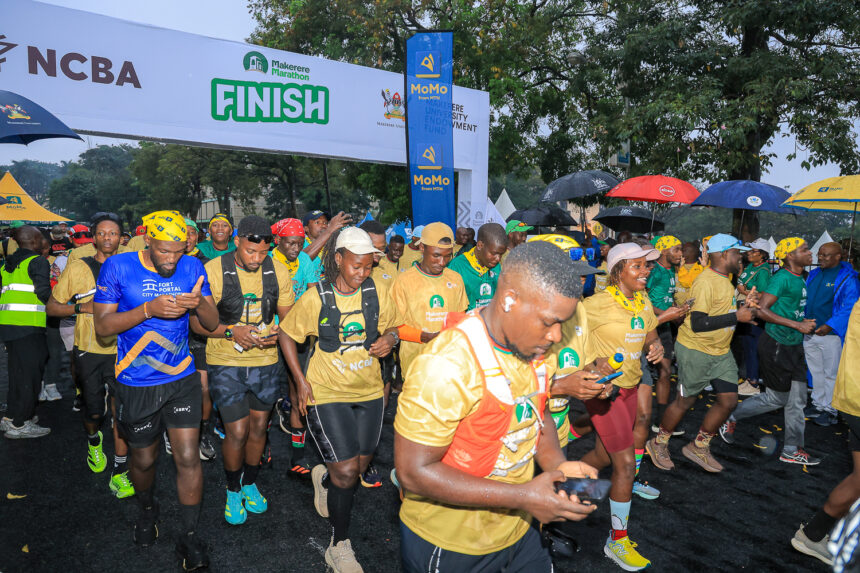
The commitment, announced in July, was reaffirmed during the sixth edition of the Makerere Marathon held on September 27, which attracted more than 8,000 runners, including students, alumni, university staff, corporate teams, professional athletes and members of the public.
Organised by the Makerere University Endowment Fund (MAKEF), the marathon was held under the theme “Run the Hills for the Future” and started and ended at Freedom Square.
The funds raised through the event will support Makerere University’s Disability Support Unit through the acquisition of specialised assistive technologies and learning equipment. Part of the proceeds will also contribute to a long-term funding pool for economically disadvantaged students.
Julius Konyani, Executive Director of NCBA Bank Uganda, said the partnership reflects the role that collaboration between the private sector and educational institutions can play in addressing community needs.
“At NCBA Bank Uganda, we believe that sustainable progress is built through meaningful partnerships. We are therefore proud that the funds raised through this year’s marathon will support the Makerere University Disability Support Unit through the provision of specialised assistive technologies and learning equipment,” Konyani said.
He said the initiative forms part of the bank’s “Change the Story” agenda, which supports investments in education, sports and sustainable community development.
“For more than a century, Makerere University has produced leaders who have transformed communities, institutions and economies across the continent. Supporting the Makerere Marathon is therefore an investment not only in today’s participants but also in the future generations who will benefit from a stronger and better-resourced university,” Konyani said.
The marathon featured five categories: a 42.2km professional race, a 21km half marathon, a 10km sprint, a 5km challenge and a 3km wheelchair challenge.
Beyond competition, the event aims to encourage physical activity and mental well-being among students, alumni, the Makerere community and Kampala residents.
Konyani said sporting events such as the marathon also provide an avenue for promoting values that can contribute to personal and community development.
“The marathon is not only about completing a race. It is about promoting healthy lifestyles, fostering resilience and demonstrating the values of discipline, teamwork, determination and excellence,” he said.
NCBA’s involvement is part of its broader corporate social investment programme, which includes education, youth empowerment, sports development, entrepreneurship, financial inclusion and environmental sustainability.
The bank said its partnership with Makerere is intended to generate benefits beyond the annual sporting event by supporting initiatives that address educational access and inclusion.
Konyani said the large turnout demonstrated the potential for individuals, institutions and businesses to work together around social and development objectives.
“Today, thousands of people have come together from different backgrounds, with one common purpose. Whether you are a student, alumnus, lecturer, corporate partner, athlete or first-time participant, your presence demonstrates the power of collective action in creating positive change,” he said.
He thanked participants for contributing to the cause, saying their participation would help expand educational opportunities while encouraging healthier lifestyles.
The Makerere Marathon has developed into a major university-led sporting and fundraising event, combining competitive races with fundraising for university programmes.
Kibet Oscar and Kipsisi Eibern emerged among the winners in the 42.2km race.
James Kirwa and Drileba Leonard were among the winners in the 21km half marathon, while Febia Chematai won the women’s 21km category.
Semmy Aproru and Abel Aloki took the top positions in the 10km sprint, while Edian Nuwagaba and Isaaci Ocen won the 5km challenge.
Kule Katende Festus and Lauben Kato emerged as winners in the 3km wheelchair challenge.
If you want it to look even more distinct from the Independent version, I can also give it a completely different headline and a more business-focused angle centred on NCBA’s Shs1.45bn investment.