Uganda’s political landscape in 2026 is shaped by the start of a new five-year political term following the January 15 general elections, continued dominance of the ruling National Resistance Movement (NRM), a strong opposition presence in Parliament and renewed debate over governance, accountability and political reforms.
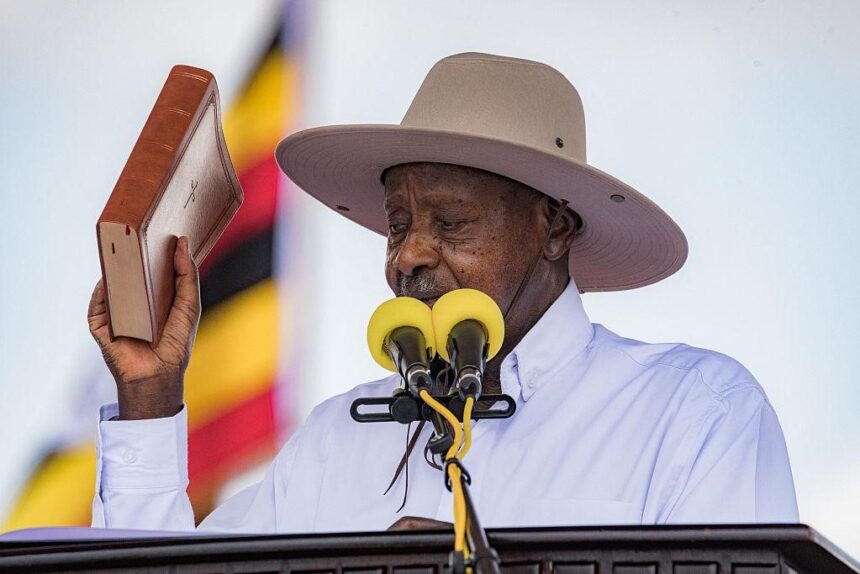
President Yoweri Museveni was sworn in for another five-year term in May 2026 after being declared the winner of the presidential election. The election extended his presidency, which began in 1986, and marked the start of his seventh consecutive term.
The NRM also retained a dominant position in Parliament. According to the Inter-Parliamentary Union, the party won 371 of the 529 directly contested parliamentary seats, maintaining a more than two-thirds majority. The National Unity Platform (NUP) emerged as the largest opposition party with 50 seats, followed by the Uganda People’s Congress with 12, the Forum for Democratic Change with nine and the Democratic Party with six. Independents won 68 seats.
The current 12th Parliament began its five-year term in May 2026 and has 549 members, including constituency representatives, district and city women representatives, special-interest representatives and ex-officio members. Parliament’s constitutional role includes making laws, representing citizens and promoting accountability and good governance.

Opposition Politics
Opposition politics remains an important feature of Uganda’s political environment. Joel Ssenyonyi serves as Leader of the Opposition in Parliament, while opposition parties continue to scrutinise government policies and legislation. Parliament in July granted leave for a private member’s Bill seeking to change how the Leader of the Opposition is elected and held accountable, reflecting an ongoing debate about the effectiveness and independence of opposition leadership.
At the same time, political tensions remain significant. Opposition figures and rights groups have raised concerns about arrests, court cases and restrictions affecting political activity. The continued prosecution and detention of opposition figure Kizza Besigye has attracted considerable attention, while former presidential candidate and NUP leader Robert Kyagulanyi Ssentamu, commonly known as Bobi Wine, has remained outside Uganda following the 2026 election.

Governance Priorities
The new political term comes with pressure on government to deliver economic transformation, employment, better public services, infrastructure and improved household incomes. The government has also placed emphasis on moving Uganda towards higher middle-income status, with oil production expected to become an increasingly important part of the economy.
For Parliament, the challenge will be balancing the government’s development agenda with effective oversight of public expenditure, public debt, service delivery and accountability.
Uganda’s political environment is therefore characterised by the continued strength of the NRM, a sizeable but fragmented opposition, an active Parliament and continuing debates over democratic governance, political freedoms and institutional accountability.
As the country moves through the 2026–2031 political cycle, the ability of government and opposition actors to engage constructively, strengthen institutions and address citizens’ economic and social concerns will remain central to Uganda’s political stability and development.