

Uganda’s Information and Communication Technology (ICT) sector is becoming an increasingly important part of the country’s economy, supporting communication, financial services, education, healthcare, business, government services and innovation. Government is positioning digital transformation as a key driver of economic growth and social development.
The country has experienced rapid growth in mobile and internet connectivity. By December 2025, active mobile subscriptions had reached 47.1 million, while internet subscriptions stood at 18.5 million and active mobile money accounts at 36.3 million, according to the Uganda Communications Commission (UCC).
Mobile money has become particularly important to Uganda’s digital economy, enabling millions of people and businesses to make payments, transfer money and access financial services without relying entirely on traditional banking infrastructure. The expansion of smartphones and mobile internet is also creating new opportunities for e-commerce, digital content, online education and technology-enabled businesses.

Growing Connectivity
Investment in telecommunications infrastructure has expanded Uganda’s digital reach. UCC reported that the country had 45.7 million telephone subscriptions and 30,161 kilometres of fibre by 2025, while the number of telecommunications towers had increased to 5,444.
Government is also investing in the National Backbone Infrastructure and other digital infrastructure intended to connect public institutions, schools, health facilities and communities. The Ministry of ICT’s Digital Transformation Roadmap prioritises broadband connectivity, digital public services, cybersecurity, digital skills and innovation.
The National Information Technology Authority Uganda (NITA-U) is similarly pursuing the expansion of digital government. Its 2025/26–2029/30 strategic plan targets increasing the proportion of Ugandans actively using e-government services from 9.2% to 40% by 2029/30.

Digital Economy
ICT is increasingly influencing how Ugandans work, trade and access services. Banks, telecommunications companies, retailers, government agencies and small businesses are adopting digital platforms to improve efficiency and reach customers.
Uganda is also seeking to develop its Business Process Outsourcing (BPO) and Information Technology Enabled Services industry as a source of employment and export earnings. Government and private-sector stakeholders have set an ambition of creating 150,000 BPO jobs by 2030, positioning Uganda as a potential regional hub for digital services.
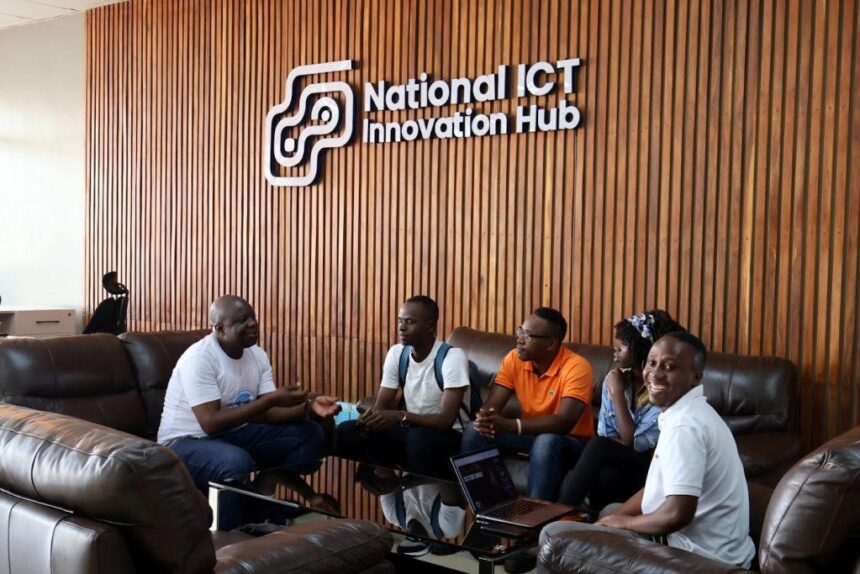
Technology startups and innovation hubs are another growing part of the ecosystem, with young entrepreneurs developing solutions in fintech, agriculture, education, healthcare, logistics and other sectors.

Persistent Gaps
Despite progress, Uganda’s digital transformation faces significant challenges. Affordability of devices and internet services, limited digital skills, uneven connectivity in rural areas, cybersecurity risks and differences in access between urban and rural communities continue to affect digital inclusion. UCC’s latest work on ICT access and usage is examining affordability, quality of service, digital inclusion and online risks.
Government’s broader Digital Transformation Roadmap therefore seeks to move beyond connectivity towards meaningful use of technology, stronger cybersecurity, digital skills, innovation and better online public services.
As Uganda pursues its digital transformation agenda, the ICT sector is expected to play an increasingly important role in productivity, employment, financial inclusion, public-service delivery and private-sector growth. The challenge will be ensuring that the benefits of the digital economy reach businesses and citizens across the country, including communities that remain underserved.


