Investments in advertising and improved product quality were widely cited as drivers of consumer confidence, with all sectors monitored in the monthly Stanbic Purchasing Managers’ Index (PMI) reporting optimism in September.
Compiled by S&P Global, the latest survey data shows continued expansion in output and new orders as customer demand remained sustained. However, the headline Stanbic PMI fell slightly to 53.0 in September from 55.0 in August.
Despite the moderation, the latest reading points to continued improvement in the overall health of Uganda’s private sector since February 2025.
A PMI reading above 50.0 signals an improvement in business conditions from the previous month, while a reading below 50.0 indicates deterioration.
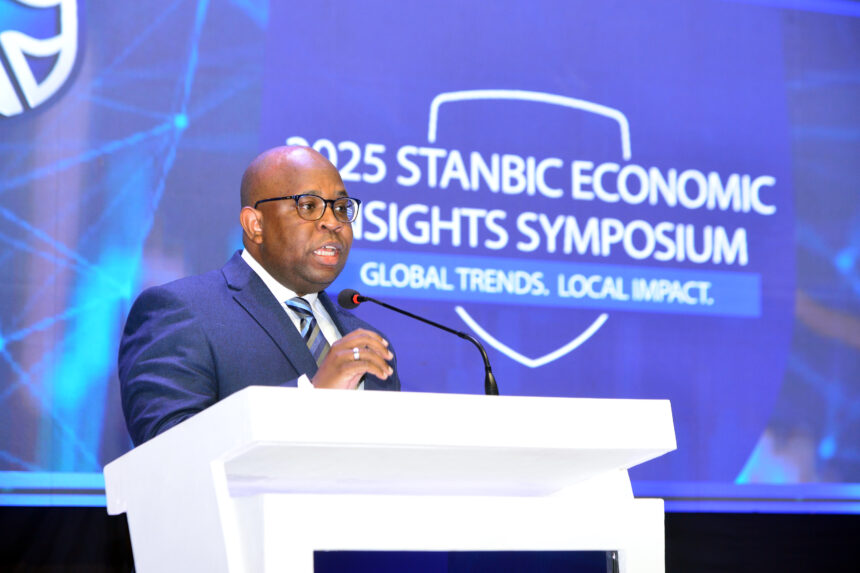
Commenting on the September data, Christopher Legilisho, an Economist at Stanbic Bank, said the PMI remained firmly in expansionary territory, although the headline reading moderated significantly compared with its six and 12-month trends.
“The Stanbic Bank Uganda PMI remained firmly in expansionary territory in September, although the headline reading moderated materially relative to its six-and 12-month trends. New orders and output remained resilient, consistent with favourable demand conditions, while employment increased across most sectors except services,” Legilisho said.
“However, rising backlogs driven by stronger demand and payment delays suggest that firms are facing growing capacity and working capital constraints.”
Many firms surveyed attributed increased business activity to higher inflows of new orders and successful advertising campaigns. New sales also rose again at the end of the third quarter, with companies reporting that sustained demand and interest generated by promotional activities supported new business.
The monthly Stanbic PMI is based on responses to questionnaires sent to purchasing managers across agriculture, mining, manufacturing, construction, wholesale, retail and services.
The PMI is a weighted average of five indices: New Orders, which accounts for 30%; Output, 25%; Employment, 20%; Suppliers’ Delivery Times, 15%; and Stocks of Purchases, 10%.
At sector level, the expansion in new orders during September was broad-based. However, agriculture and wholesale and retail firms recorded contractions in output.
Legilisho said supply-side pressures intensified during the month as higher transport and logistics costs strained supply chains.
“Firms responded by increasing purchasing activity and building inventories in anticipation of sustained demand, providing a buffer against potential disruptions but also increasing exposure to elevated input costs,” he said.
The increase in operating expenses was commonly linked to higher utility, fuel and transportation costs, while firms also reported an increase in wage bills. Total input costs rose across all five monitored sectors.
Amid favourable demand conditions and rising input costs, firms sought to pass higher operating expenses on to customers through increased selling prices. Output charges rose across all sectors except construction, where a decline was recorded.
In response to higher new orders and signs of pressure on capacity, Ugandan companies increased their staffing levels in September. Survey responses indicated that both temporary and permanent workers were hired.
Backlogs of work also increased for the fourth consecutive month, with some firms reporting that delayed payments had hampered the processing of incoming work.
Input buying increased during September as firms adjusted purchasing activity to meet greater business requirements. Some companies also increased stocks in anticipation of higher new orders in the coming months, with inventories rising for the 19th consecutive month.
However, supplier performance deteriorated further, with firms citing international transportation delays and higher fuel costs.