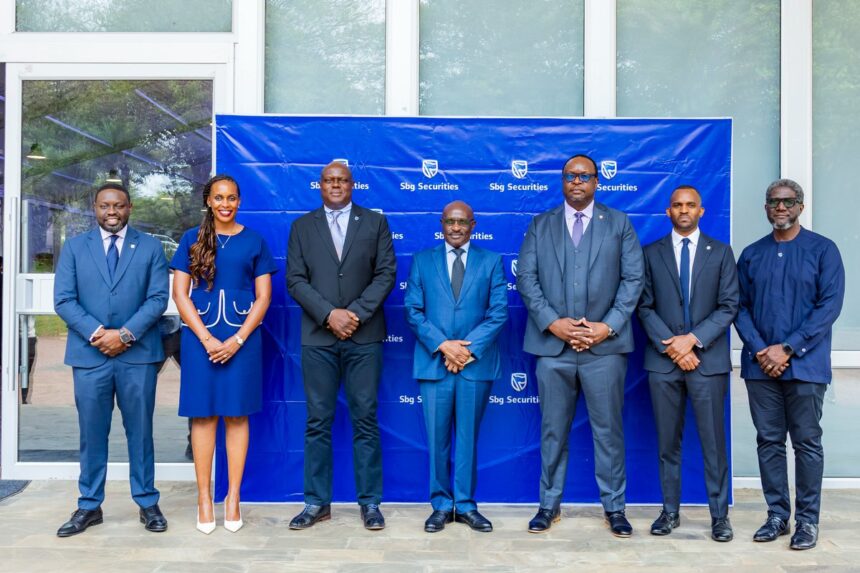
On Oct. 1, Stanbic Uganda brought government officials, regulators, pension managers and financial sector players together to examine how Uganda’s growing retirement savings can help finance its economic transformation.
The inaugural Stanbic Uganda Pensions Conference, held at Serena Hotel Kampala under the theme “The Role of the Pensions Sector in Accelerating the Tenfold GDP Growth Strategy,” focused on widening pension coverage and creating more investment opportunities for long-term savings.
The conference came as Uganda pursues an ambitious plan to expand its economy from about US$50 billion to US$500 billion by 2040, increasing the need for domestic capital to finance infrastructure, businesses, housing and other productive investments.
Mark Ocitti Ongom, chief executive officer of Stanbic Uganda Holdings, said professionally managed pension savings could become an important source of long-term capital.
“Retirement savings, once professionally managed, are sources of long term capital for the economy,” Ocitti said.
He said the broader challenge was developing a stronger savings culture that could support businesses, create jobs, expand economic activity and generate tax revenues.
Expanding coverage
Simon Mulongo, minister of state for labour, employment and industrial relations, said Uganda must increase pension participation to unlock the sector’s potential. “More demanding is to expand enrollment for account holders,” Mulongo said.
He said pension products should reach people beyond formal salaried employment, including farmers, traders and informal sector workers.
Affordability will be central to that effort. “Affordability is also key for pension sector products,” Mulongo said, calling for banks, pension institutions, SACCOs, savings groups and market associations to work together to deepen financial inclusion.
Daisy Nabakooza, director of supervision and market conduct at the Uganda Retirement Benefits Regulatory Authority, said pension assets under management had reached about Shs36 trillion by June.
She said the funds could support areas such as real estate and infrastructure, but stressed that pension money must be deployed with adequate safeguards.
“We cannot deploy funds in areas we cannot trust 100%,” Nabakooza said, noting the need for clear structures covering management, accountability, security, valuation and returns.
Investment gap
Kenneth Owera, chief investment officer at the National Social Security Fund, said NSSF manages about Shs35 trillion and must balance national development objectives with members’ returns.
“That capital has to contribute to national development but also ensure we issue a good return on investment to our members,” Owera said.
NSSF invests in government securities, equities, real estate and regional markets. However, Owera said investment opportunities were not expanding as quickly as pension assets.
“The challenge is there is growth in assets at NSSF but investment opportunities are not growing as much as we expect,” he said.
Paul Muganwa, executive director at Stanbic Bank Uganda, said pension funds have an appetite for long-term investments but need assets offering appropriate returns and exit options.
“Pension funds have appetite for investment in long term investments and they want options,” Muganwa said.
The discussions underscored a two-sided challenge for Uganda: expanding retirement savings while developing enough credible, well-structured investments to absorb the capital.
As the country pursues its US$500 billion economic ambition, pension savings could increasingly connect household contributions with long-term investment, provided members’ returns and security remain protected.